 |
|||||||||||||||||||||||||||||||||||||||||||||||||||||||||||||||||||||||||||||||||||||||||||||||||||||||||||||||||||||||||||||||||||||||||
 |
Frequently Asked Questions: Q: In view of the global pandemic,
is it possible to climb Mt. Fuji virtually? (added Mar. 24,
2021) Q: In view of the global pandemic, is it possible to climb Mt. Fuji virtually? (added Mar. 24, 2021) A: YES!! The Mount Fuji Virtual Challenge will take you on an exciting 46-mile (74-km) adventure around the Fuji Five Lakes and then on to the summit of Mount Fuji.... the tallest mountain in Japan. Using their mobile iOS and Android apps, each time you complete a distance-based exercise such as running, walking, cycling, swimming, etc., you can enter the distance in miles (or kms) into the app either manually or by syncing your activities from your favorite fitness tracker or smartwatch. After you reach Mt. Fuji's summit, you can celebrate your achievement with a stunning, limited edition Mount Fuji Virtual Challenge finisher's medal, which you can see being proudly displayed below recently by a couple friends of mine in Wisconsin!  Mt. Fuji Virtual Challenge finishers with their gorgeous medals
Q: What is
Mt. Fuji's
(富士山, Fuji-san) elevation? Q: How
many people climb Mt. Fuji
every year? (updated
April 3, 2019) The number of climbers did increase slightly in 2016 and 2017, but are still at levels below the all-time 2010 peak. [There was a sharp dropoff in the number of climbers in 2018, but this was due in part to a counter problem on the Fujinomiya Route.] It should be noted that this only includes Mt. Fuji
climbers during the official climbing season. If one counts all the
off-season climbing which occurs
during the other 9.5 months of the year, one could argue even with a
conservative guesstimate that at least 400,000
climbers trek up the slopes of Mt. Fuji every year. Wow. And this doesn't even include the hundreds of thousands of tourists who visit the 5th stations every year by car or bus and who don't even climb Mt. Fuji. No wonder Mt. Fuji is generally regarded as the most visited mountain in the world. More
detailed and up-to-date Mt. Fuji climbing statistics and graphs by
route, year, day,
and time of day are shown below. Q: When
is Mt. Fuji's official
climbing season? (updated
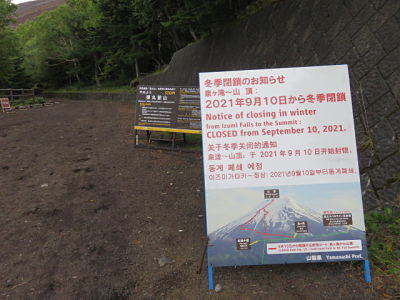
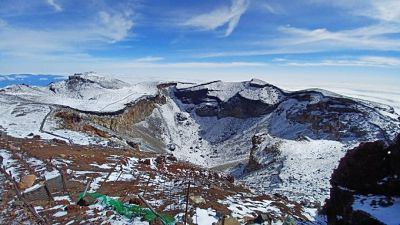
Sept. 13, 2021) During the official summer climbing season, temperatures at the summit can be below freezing at night. Although it is possible to climb Mt. Fuji outside of the official climbing season (with permission from the Yamanashi Police Dept.), it is not recommended, as most facilities, including most mountain huts, are closed; weather conditions are unstable and unpredictable; rescue personnel are limited; climbing conditions may be extremely hazardous; and public transportation access is minimal. The following Mt. Fuji winter climb warning is
from the Fujiyoshida City's official website:
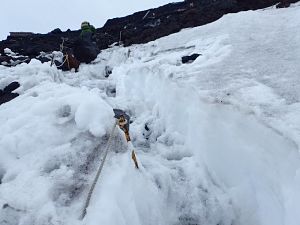
I might add that Japanese climbers die from hypothermia ALL the time, even in July and August, so attempting Mt. Fuji in winter is a death wish, in my humble opinion. If climbing Mt. Fuji during the off-season, the Yamanashi and Shizuoka Police Depts. require this Mt. Fuji Climbing Plan form be filled out and emailed or faxed prior to your journey. Off-season climbers would also be well-advised to read this very informative pamphlet," Three Rules for Off-season Climbers of Mt. Fuji," prepared by prefectural officials. A very excellent & informative piece was written recently by mountain climbing extraordinaire Mr. Chris White, identifying the hazards and risks of a winter ascent of Mt. Fuji titled "I want to climb Fuji in winter." (added Aug. 11, 2014) The video below encapsulates in a short minute and a
half just one of several reasons I've never climbed mountains in
winter. Uh, no thanks. Scary POV footage of ice climbing fall (If the player above is not visible, you can view video at YouTube here.) Not to belabor the point, but here is a pertinent news story related to off-season Mt. Fuji climbing about some heroic Sasebo sailors who rescued a 60-year-old Japanese man who fell off the summit of Mt. Fuji in Dec. 2011: Stripes.com Here's a video of that Japanese man in free fall down Mt. Fuji's slope, which Yamanashi Prefectural Police mountain rescue personnel refer to as "a tilted skating rink." Finally, after 2015 kicked off disastrously with a rash of winter mountain climbing accidents in Japan, resulting in several deaths and missing climbers and nearly 30 more folks having to be rescued, Wes Lang, founder of the popular Hiking in Japan website and the over 2100-member Hiking in Japan Facebook group, felt motivated to put together these very useful Winter Hiking Tips.
Q: When
are the best dates to climb during Mt. Fuji's climbing season? (updated
Mar. 16, 2017) More detailed and up-to-date Mt. Fuji climbing statistics and graphs by route, year, day, and time of day are shown below. Q: Is
there a choice of hiking trails when climbing Mt. Fuji? (updated
Aug. 7, 2022) Q: I'm planning to climb Mt. Fuji in early July. Will there still be snow on the trail? (updated Aug. 7, 2022) A: If you choose any of the Shizuoka trails, the answer will almost always be 'yes.' In 2012, the Fujinomiya Trail above the New 7th Station and the Subashiri Trail above the 7th Station weren't opened all the way to the summit until July 13, and the Gotemba Trail above the 6th Station wasn't opened until July 20. In 2014, the 3 trails originating in Shizuoka Prefecture were scheduled to open on July 10, but due to late lingering snow, the opening dates for the Fujinomiya and Gotemba routes (all the way to the summit) were delayed until July 18, as shown below. The main Yoshida Trail, the only Mt. Fuji trail originating in Yamanashi Prefecture, as a rule always opens on July 1, but as you can see below, in years past, the dates for when the 3 Shizuoka Prefecture trails opened all the way to the summit have varied considerably (even though since 2015, it's consistently been July 10):
(Source: http://www.pref.shizuoka.jp) Q: How
long does it take to climb Mt. Fuji and what is the
elevation gain? (updated April 22, 2023) 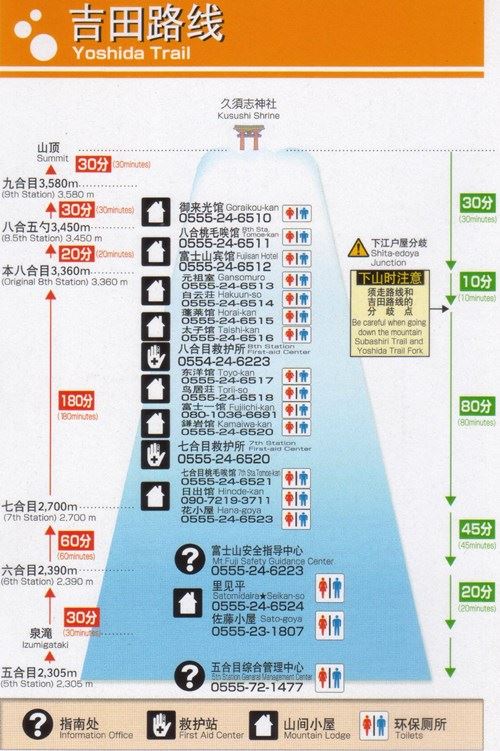 Mt. Fuji Yoshida Trail climbing times (Image credit: Dept. of Community & Environmental Affairs, Shizuoka Prefecture) Q: What
are the hiking distances
from Mt. Fuji's 5th Stations to its summit and how
steep are the various Mt.
Fuji climbing trails? (updated Aug. 12, 2021)
The
Gotemba Trail is not only the longest Mt. Fuji climbing route, but
because of the astounding,
knee-knocking elevation gain involved, it takes top honors in that
category as well. One
thing you can look forward to on the downhill Gotemba Trail, though, is
the Osunabashiri (sand slope, 大砂走り) which many climbers literally run
down,
descending 1110m from the 3030-m 7th Station to the 1920-m New 5.5th
Station in only 70 minutes. Yee Hah!! [Note:
The hiking distances and % grade numbers above
were manually calculated in April 2019 by an amazing, kind-hearted
systems administrator in New York who is "just happy to help out other
hikers." Thanks, Amit!] Q: What are the approximate distances between stations on Mt. Fuji's main Yoshida Trail? (added July 2, 2017) Uphill Yoshida Trail distances between
stations (km)
Downhill Yoshida Trail distances between stations (km)
Source: https://www.yamareco.com/modules/yamareco/detail-78331.html Q: Are
there some Mt. Fuji mountain huts where I can rest or sleep
along the way?
(updated May 11, 2023)
On a separate page I've compiled a list of Mt. Fuji mountain
huts for Yoshida and Fujinomiya Trails
(updated May 11,
2023)
with
website URLs, phone numbers, elevations, sleeping capacities, and
opening/closing dates for the Yoshida huts.
A detailed list of Mt. Fuji mountain huts for the 3 routes from
Shizuoka
Prefecture is linked from
the mountain hut page above. Please note: most huts are now open till
the end of the climbing season in September, so one way to escape the
crowds is to consider climbing
Mt. Fuji in early September. One hazard though is the frequent typhoons
that normally
blast thru Japan in September. Q: Is
it necessary to make reservations at the Fuji-san mountain huts? (updated
May 11, 2023) Q: What
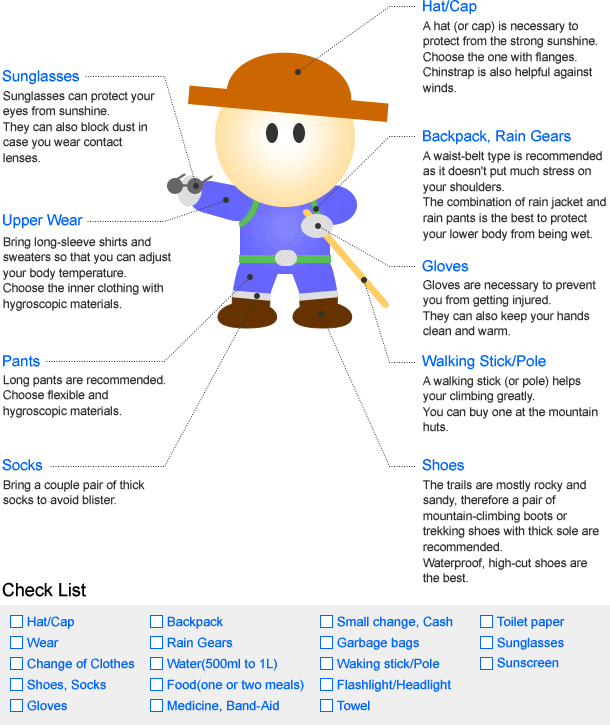
kind of equipment is required for climbing Mt. Fuji? (updated
Mar. 16, 2020)
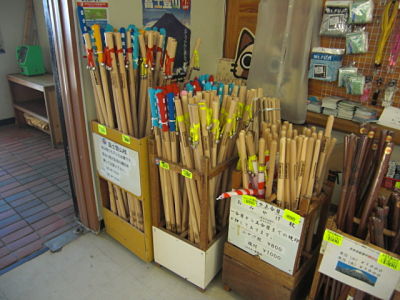
You should also bring lots of cash (including ¥100 coins for the ¥200, pay-per-use eco-toilets) to buy stuff like souvenirs, to pay for the huts, to get stamps on your commemorative Mt. Fuji hiking stick ("kongouzue," 金剛杖), to eat a hot meal (curry rice or ramen may cost ¥1000), to mail a postcard from the summit, to catch a bus from the 5th stations, etc. ATMs are generally found in most Japanese convenience stores these days, but not all of them have 24-hour service. I also suggest you bring your own water, at least 2 liters per person, as you will have to fork over ¥500/bottle at the huts and vending machines, and there are generally no huts or watering spots along the "down" trails. Because Fuji-san is basically a "hike-up" climb (albeit a fairly steep one) with only some occasional scrambling, no technical equipment is required to climb Mt. Fuji.
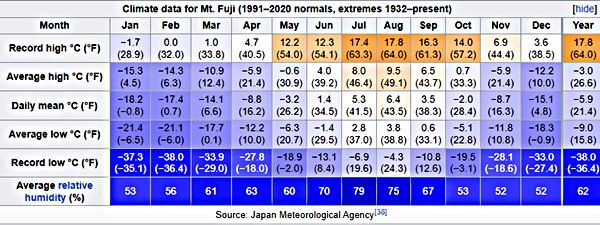
Q: What
temperatures can I expect when
climbing Mt. Fuji? (updated April 22, 2023)
Q: Where
can I see current weather conditions and/or weather
forecasts for climbing Mt. Fuji? (updated April 22, 2023) Q: How
do I reach Mt. Fuji's 5th Stations (Gogōme, 五合目)? (updated
July 15, 2023) Return buses back to Shinjuku also take 2.5 hrs. and
depart the 5th Station 9 times a day from
10:00 till
17:00 during the
summer climbing season. More details on bus schedules
to the Fuji Subaru Line 5th Station are here
and
reservations for the Shinjuku to 5th Station highway bus can be made
online up to one month in advance here.
Other
options for bus service to the Mt. Fuji area, including from various
points in Tokyo such as Shibuya, Shinjuku, Akihabara, Tokyo Station,
and Haneda Airport, can be accessed here: http://bus-en.fujikyu.co.jp/highway/
July 15, 2023 update: Round-trip bus tickets to the Fuji Subaru Line 5th station from both the Fujisan Parking Lot and Mt. Fuji Station/Kawaguchiko Station can now be purchased & used through the new Fujikyu Bus app. As for the other Mt. Fuji climbing
routes: Also,
an amazing PDF showing 2019 bus schedules to the 5th Stations for
all 4 Mt. Fuji trails, including express buses from nearby airports,
can be
viewed here. [Buses to the 3 trails from Shizuoka were
suspended during 2020 due to Covid-19.] Q: What
are the elevations of Mt. Fuji's 5th Stations? Q: What
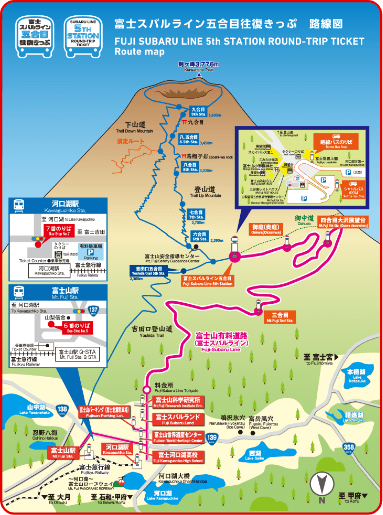
kinds of services and facilities will I find at the Fuji Subaru Line
5th
Station? (updated
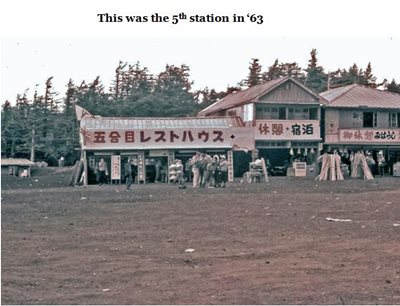
July 1, 2018) 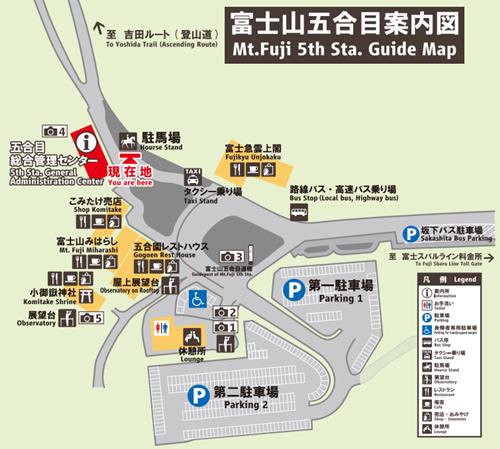 Mt. Fuji 5th Station Guide Map (富士山五合目案内図) (compass direction "north" faces downward) (image credit: subaruline.jp) Quite a stark contrast, in fact, to how it appeared over 50 years ago... 
July 1, 2018 update: -Starting from July 1, a manned currency exchange center will be introduced onto the 1st floor of Fujikyu Unjokaku which will handle 158 different currencies, every day during climbing season from 7:00am-10:00pm. -Fujikyu Unjokaku’s capsule hotel service Mt. Fuji Lodge is introducing an online booking system. Bookings will take place on the Fujikyu Unjokaku website and can be made in Japanese or English – with credit and debit cards, too (also with non-Japanese online travel agents such as Expedia and Agoda). Q: What
kinds of services and facilities will I find at Mt. Fuji's
summit? (updated
August 17, 2018)
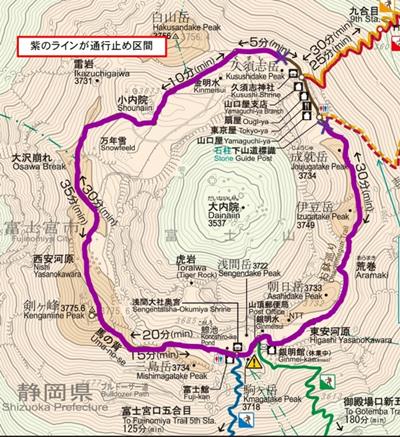
1) Kengamine
(剣ヶ峰, elev. 3776m, Japan's highpoint)
2) Hakusandake (白山岳) 3) Kusushidake (久須志岳) 4) Joujugatake (成就岳) 5) Izugatake (伊豆岳) 6) Asahidake (朝日岳) 7) Sengendake (浅間岳) 8) Mishimagatake (三島岳) Detailed Mt. Fuji trail maps for each of its 4 climbing routes are on Page 2 of 2. Q: What
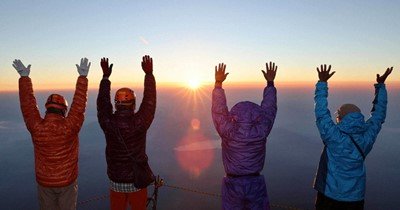
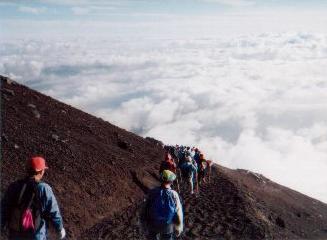
time of day is the best time to climb Mt. Fuji? (updated July 19, 2019) When I climbed Mt. Fuji on the first Saturday in August, my friends and I left the Fuji Subaru 5th Station around 10:15 pm and arrived at Mt. Fuji's summit just before sunrise around 4:55 am. By that time a layer of clouds had formed near the base of the peak, so the sun actually rose above the clouds, like the view you sometimes see from airplanes flying above the clouds. The Japanese call this phenomenon "unkai (雲海)," meaning "sea of clouds." Another option
is to start climbing Mt. Fuji from the 5th Station in the late morning,
arrive at the top for the equally beautiful sunset, sleep overnight at
the top, catch the sunrise the next morning, and then head back down
during the day. This 2013 Mt.
Fuji Climbing Guide Map has some recommended plans for climbing
Mt.
Fuji,
depending on how many days you have and what time of day you want to
start hiking. [Sunrise/sunset times for the Mt. Fuji climbing season
are shown on Page
2 of 2.] Also, since the Fuji Subaru Line 5th Station is the
staging area for most climbing tour groups, many tours gather there
before and after noon, and then after staying a while for
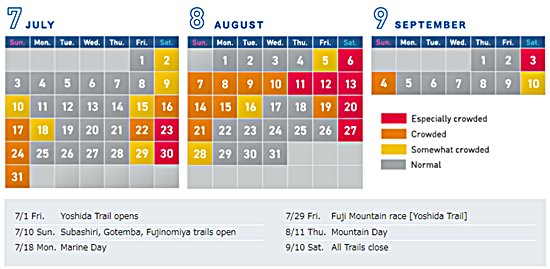
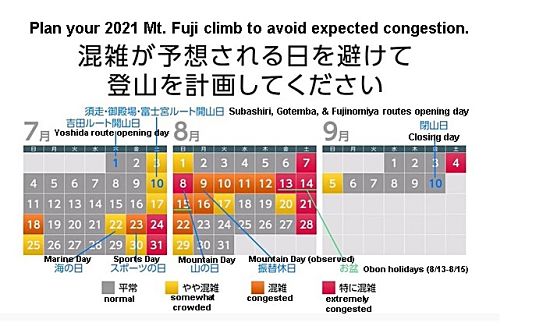
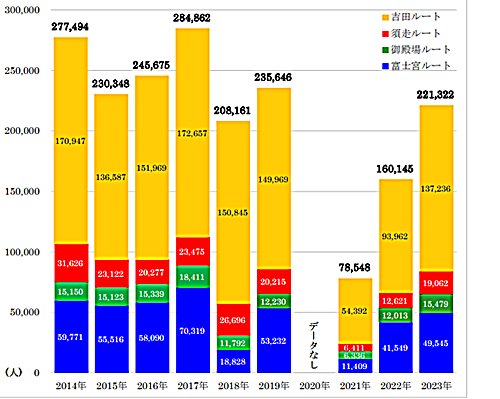
acclimatization, they hit the trail. Q: How can I avoid the crowds when climbing Mt. Fuji? (updated Jan. 4, 2024) A: In short, to avoid the crowds when climbing Mt. Fuji, don't climb on the weekends or holidays (especially Saturdays), late in the afternoon or around midnight, during the 3-day Marine Day (海の日, Umi no Hi, 3rd Mon. in July) weekend, or the Obon holidays in mid-August (usually around Aug. 10-15). Below are some interesting charts compiled courtesy, with permission, of the National Parks of Japan, showing statistics for Mt. Fuji climbers by route over the past several years, based on data recorded by infrared counters near the 8th station on all 4 mountain trails.
During the July 1 - Sept. 10, 2023 Mt. Fuji climbing season, there was a total of 221,322 Mt. Fuji climbers, 38% more than the number of climbers in 2022 (160,100), but still only 94% of the pre-pandemic number of climbers in 2019 (235,646). The breakdown of 2023 Mt. Fuji climbers by trail was 137,236 (~62% of total) on the Yoshida route, 49,545 (~22%) on the Fujinomiya route, 19,062 (~9%) on the Subashiri route, and 15,479 (~7%) on the Gotemba route. Of these 221,322 Mt. Fuji climbers in 2023, the busiest climbing period was July 21-31 with 43,500 climbers, the 2nd busiest was Aug. 21-31 with 35,832 climbers, and the 3rd busiest was July 11-20 with 33,365 climbers. The busiest 2023 Mt. Fuji climbing day was Sun. July 16, the 2nd busiest was Sat. Aug. 12, and the 3rd busiest Sat. July 29. In Mt. Fuji's 2023 climbing season, the average daily number of climbers on Saturdays, Sundays, and holidays was 4494, nearly twice (169%) the weekday average of 2657 climbers per day. 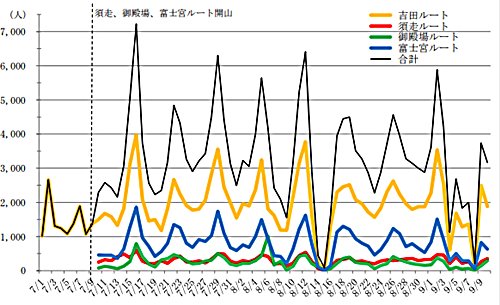 Number of Mt. Fuji climbers in 2023 by day and route (black line indicates total climbers on all 4 routes) Notes: (1) Not surprisingly, the busiest climbing days were on the weekends, especially Saturdays. (2) The steep drops on Aug. 14-15 & Sept. 8 can be attributed to the landfall arrival of Typhoons 7 & 13, respectively. (3) If you want to totally geek out and drill down to even more detailed 2023 Mt. Fuji traffic statistics by day and route, check out this beautiful, color-coded pdf. 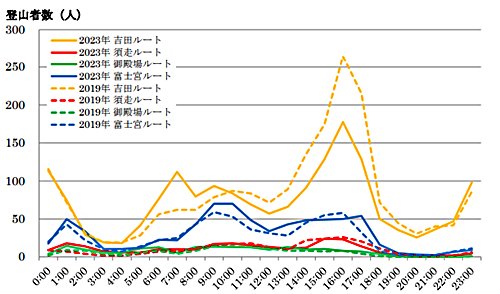 Number of Mt. Fuji climbers in 2019 & 2023 by time of day and route (solid lines=2023; dashed lines=2019) Ministry of the Environment officials guesstimate that the big spike around 16:00 to 17:00 pm in the afternoon can be attributed to climbers staying in huts at the 8th station or higher, the 23:00 pm to 1:00 am spike is mostly climbers who are hopeful of catching the sunrise from the summit, and the peak from 7:00 to 9:00 am is likely day-trip climbers. All charts and Mt. Fuji climbing statistics above are courtesy, with permission, of the  and can be viewed
in their entirety (in Japanese) here. and can be viewed
in their entirety (in Japanese) here.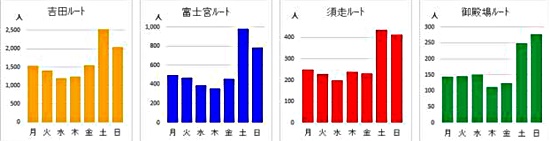 Number of 2018-2021 Mt. Fuji climbers by day of week (excluding 2020) (Mon.月-Sun.日) (Graph courtesy: Naoto Handa, Ministry of the Environment, Fuji Five Lakes Management Office) In June 2023 the Fujisan World Cultural Heritage Council posted on their website tips (containing the congestion calendar below) on how to best avoid congestion during the 2023 Mount Fuji climbing season. 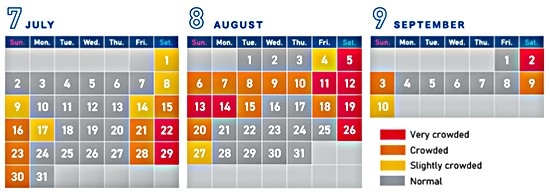 2023 Mt. Fuji congestion calendar (image credit: Fujisan World Cultural Heritage Council) 7/1 Sat. - Yoshida Trail
opens
7/10 Mon. - Subashiri, Gotemba, & Fujinomiya trails open 7/17 Mon. - Marine Day 7/28 Fri. - Fuji Mountain race [Yoshida Trail] 8/11 Fri. - Mountain Day 8/13 Sun. - 8/15 Tues. - Obon holidays 9/10 Sun. - All trails close 2023 Mt. Fuji Climbers: Avoid the Crowds to Enjoy a Safe Climb (digest version) (If the player above is not visible, you can view video at YouTube here. The full 14-min. video version is here.) The 2018 congestion calendar stated that one of the dangers of climbing the busiest and most congested Yoshida Trail is: "Being in high risk of falling over like dominoes or hit by falling rocks." As one of my Facebook friends aptly commented, "It makes one almost want to be a part of it." Ha-ha.  In June 2023 Fuji-san's official site posted the graphic below of the forecasted most crowded 2023 times of day from the 8th station to the summit for all 4 trails. 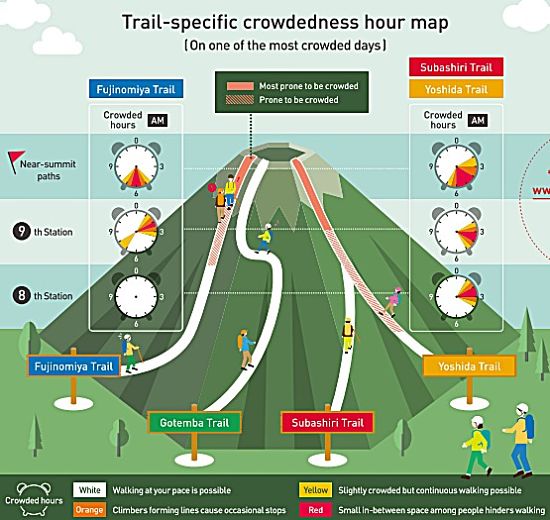 Mt. Fuji trail crowdedness map (image credit: fujisan-climb.jp/en) In short, without having to geek out too much: Gotemba Trail: no problem Fujnomiya Trail: only congested near the summit at sunrise Yoshida & Subashiri Trails: from where they merge at the 8th Station to the summit, congested from 2-6 am and severely congested from 3-5 am
Have a Question or Story about Climbing Mt. Fuji?Do you have a question or a story about climbing Mt. Fuji? Please pay it forward and share your climbing experience (along with up to 4 pics) with other visitors to this page still planning their Mt. Fuji hike! What Other Mt. Fuji Climbers Have SaidClick below to see contributions from other Mt. Fuji climbers...
How much time does it take from the Mt. Fuji Yoshida Trail to the Kengamine Peak?
How hard is it to get a Mt. Fuji mountain hut reservation at a higher elevation station?
When do they start accepting reservations for the Mt. Fuji Fujinomiya trail mountain huts?
When should I make my 2024 Mt. Fuji mountain hut reservation?
How to get to the Fujinomiya, Gotemba, and Subashiri trails from Yokohama station?
Can we hire a taxi for the Fuji Subaru 5th station at midnight to hike up the Yoshida Trail for the 4 am sunrise?
From the top of the Fujinomiya trail, how long does it take to walk around to the Yoshida trail to get a better sunrise viewpoint?
Can you catch a taxi at the Fuji Subaru Line 5th Station around 7 or 8 pm?
How do I get back to Shinjuku from the Mt. Fuji 5th Station after 17:00 pm?
What's the Mt. Fuji mountain hut and toilet situation before the season officially opens on July 1st?
Is there any way to climb Mt. Fuji in the week before the 7/1 opening of the season?
What’s the email address for submitting the required off-season Mt. Fuji climbing form?
Is it possible to climb the Mt. Fuji trail to the 6th or 7th station in June 2023?
What date is the latest Mt. Fuji mountain huts stay open where I can get my walking stick stamped?
I climbed Mt. Fuji Aug. 13, 2022 during a typhoon!
Can I climb Mount Fuji at 10 pm?
I climbed Mt. Fuji on July 23-25, 2022!
How long is the historic Mt. Fuji Yoshidaguchi Trail?
Is it OK to climb Mt. Fuji via the Yoshida trail on September 30, 2021?
Successful trip to Mt. Fuji summit on Thurs., Sept. 9, 2021
Do you recommend climbing Mt. Fuji in late August or mid-July?
Cost of lunch options at 5th station?
How far in advance can you buy bus tickets to Mt. Fuji's 5th Station?
Climbing Mt. Fuji was definitely worth the effort!
How else can I get to the Fuji Subaru Line 5th Station from Shinjuku on a Sunday morning?
Any suggestions for booking a Mt. Fuji hut on Monday, September 2nd?
Are the Mt. Fuji Yoshida trails one way?
Is it possible to sleep outside the Mt. Fuji mountain huts with a sleeping bag?
Can I climb up the Yoshida exit trail or Gotemba/Fujinomiya trails to the Mt. Fuji summit on July 5th?
How to get my Mount Fuji walking stick stamped a few days before opening season?
Mt. Fuji bag storage options?
Climbing Mt. Fuji in September 2019 after the official season closes
Any update on the Mt. Fuji Yoshida Trail restoration efforts?
Is it OK to climb Mt. Fuji the week before the official climbing season opens?
How do I make a reservation at the Chojo Fujikan summit mountain hut at the top of the Fujinomiya Trail?
Are the Mt. Fuji hiking distance and % grade numbers accurate?
How to avoid altitude sickness while climbing Mt. Fuji?
Is it safe to climb Mt. Fuji on 17th/18th September?
Can I go up Subashiri trail and go down Fujinomiya trail?
Can I climb up Fujinomiya and then walk down Subashiri Trail and get all the hut stamps on that trail?
Is the fee for climbers buses to the 5th stations covered by the 3-day Mt. Fuji Pass for the whole 3 days?
What can I do during my 2 free days after climbing the Gotemba Trail?
How do you reach the Yoshida descending trail from the 8th station?
Is it possible to just hike up the Yoshida Trail for 2 hours and then come back down?
Is a hiking plan required before climbing Mt. Fuji, or only during off-season?
I haven't been able to find any info on the Mt. Fuji Yoshida Trail 10th station huts.
Does the Mt. Fuji Yoshida Trail open on July 1st at exactly 12 am?
Are buses from Kawaguchiko to the Mt. Fuji 5th Station crowded?
Can I camp out at the top of the Mt. Fuji summit?
I'd love to replace my Mt. Fuji walking stick that was stolen some 40 years ago.
Looking for guided tour that does Mt. Fuji Fujinomiya or Subashiri trail or combination.
Can you recommend a hotel near Mt. Fuji?
Can I do a same-day Mt. Fuji hike from Tokyo?
Car vs. bus to the Mt. Fuji 5th Station
Reserving bus tickets (Shinjuku - 5th station, return) online for international travellers
When can I start booking Mt. Fuji mountain huts?
Is it dangerous to sit up at the Mt. Fuji summit overnight?
Where will I find the 2018 climbing season dates for the Yoshida trail?
Can I buy a fully stamped Mt. Fuji walking stick?
Are the stamps on the walking sticks different for each Mt. Fuji trail?
Is there a list of climbers who have reached the Mt. Fuji summit?
Can I take a taxi to the Mt. Fuji 5th station in late December?
Are there any people who will guide runners up Mount Fuji?
Hiking boots and walking sticks for rent at Mt. Fuji 5th Station?
Can I climb up on one Mt. Fuji trail, and down on a different trail?
I'd like to trek up Mount Fuji in May...
Where to stay overnight on Mt. Fuji's Fujinomiya Trail?
Advice and Information on Mt. Fuji trails and huts
Can you climb up the Yoshida Trail from the base of Mt. Fuji?
I wonder if it's possible to just hike up to the Mt. Fuji 7th station and make a return.
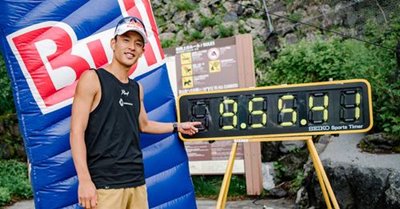
Is Bullet Climbing Mt. Fuji an actual thing and do people actually attempt it?
Can I climb Mt. Fuji in April?
Can I stroll around the Mt. Fuji base in April?
Was the stamp I got on my walking stick at Mt. Fuji's summit shrine the "sunrise stamp"?
Climbing to the Mt. Fuji summit October 8, 2016
Can we climb Mt. Fuji in October?
Should we climb Mt. Fuji after the season is closed?
Racing to the top of Mt. Fuji in 1971!
Following Subashiri Trail but staying at Ganso-Muro (Yoshida)
Climbing Mt. Fuji a few days after official close season
Any English speakers climbing Mt. Fuji on the night of 9/9/2016 on the Fujinomiya Trail?
What's the price of tickets needed to get to Shin-Fuji Station or Fujinomiya Station?
Your website was helpful for summiting Mt. Fuji on July 7, 2016.
How many people actually reach the Mt. Fuji summit?
Are there any Mt. Fuji mountain huts still open on Sept. 13, 2016?
What is another way we can get to the 5th Station from Shinjuku in the early AM?
Can I make it to the top of Fuji-san on my first time try?
Do I need a permit to hike Mt. Fuji?
Which Subashiri Trail mountain hut would be the best to stay at?
Climbing to Mt. Hoei via Fujinomiya trail on Sept. 18, 2016
How to get from Kawaguchiko to the Gotemba/Subashiri 5th stations?
Can you camp on Mt. Fuji?
What are the temperature and precipitation on top of Mt. Fuji?
Is it possible to climb Mt. Fuji in mid-June?
Any transport between the Mt. Fuji summit and the 6th station?
Is it possible to climb Mt. Fuji on the Yoshida trail and descend it on the Fujinomiya trail?
How do you get from Hakone to the Fuji Subaru Line 5th Station?
When should we call the Fujikan Summit (Chōjō Fuji-kan) mountain hut to make reservations?
What is the age of the youngest person to climb Fuji-san in one day?
Is it feasible to climb Mt. Fuji on 30th June 2016?
Is it possible to catch a taxi at Kawaguchiko Station at 4am?
Can you cook your own food and drinks on Mt. Fuji?
Where can I receive brochures on Mt. Fuji?
Is there a way to get from 5th station to Kawaguchiko around 7 or 8 pm?
Mt. Fuji: Up the Yoshida trail & down the Subashiri trail with overnight stay
How well marked are the trails from Mt. Fuji's base to the 5th Station?
Are stations and huts accessible from the Yoshida descent trail?
Is it true you can rent horses from Mt. Fuji's 5th Station???
How do you say "Falling Rock" in Japanese when you dislodge a stone?
How late can you sleep in a Mt. Fuji mountain hut?
Which sand run is better....the Gotemba trail or the Subashiri trail?
Do you know if there are any mountain equipment rental shops in Gotemba?
Do you know where we can park our car, please, for our climb via the Fujinomiya Trail?
Can I get stamps at night, and do they start stamping sticks from station 1 or not until station 5?
What route is best as far as scenery, but may be less traveled?
Which one of these 2 options do you recommend in regards to Gotemba Trail?
Is there a reason why the Mt. Fuji indicated climbing times are so long?
How crowded will the Subashiri trail and the summit be on a weekday?
What's the best way to get back to Shinjuku from Mt. Fuji's 5th Station?
How do I get to the Mt. Fuji 5th station with a JR Rail Pass?
How about starting from Fujinomiya 5th station and connecting with the Gotemba trail 6th station... at night?
How long will it take to climb the Yoshida trail during the day?
Can I hike up the Yoshida Trail and down the Gotemba Trail in early July before the Gotemba Trail officially opens?
What should I wear when climbing Mt. Fuji?
Which is your favorite Mt. Fuji route?
How far is it from the Yoshida 10th station to the Fujikan summit mountain hut?
How can I tell the current Mt. Fuji pressure readings?
Are there any stations open on the Fujinomiya trail after the close of climbing season?
Is calling the Mt. Fuji huts the only way to place a reservation?
Will the mountain huts at the various stations be open from June 25?
Will we be charged the 1000 yen admission to just go up to the 6th Station to look around?
Is there an overnight Mt. Fuji tour you recommend?
What is the Mt. Fuji mountain hut price for a private tour?
How far in advance do we need to book the Mt. Fuji mountain huts?
When will the Fujinomiya Trail open?
Up Fujinomiya, Down Yoshida? Loner vs. Climb Buddy?
Is it possible to climb Fuji-san in the last week of June?
Is it possible to ascend the Yoshida trail and descend the Fujinomiya trail?
How can I get from Gotemba Station to Sengen Shrine really early in the morning on my climbing day?
Which Mt. Fuji station is the best to sleep at in order to catch sunrise at the summit?
Where can we store our backpacks while climbing Mt. Fuji?
Can I climb Mount Fuji without a guide?
What kind of food can we expect at Mt. Fuji mountain huts?
How do you make reservations for Mt. Fuji mountain huts?
Can we hike up the Gotemba trail and down the Yoshida trail?
Can we start climbing Mt. Fuji on the evening of June 30?
Mt. Fuji mountain hut availability at night
Does Mt. Fuji and its transport there close on national holidays?
Is it more advisable to stay in the Mt. Fuji area or travel from Tokyo?
Walking route from central Tokyo to Mt. Fuji
We want to start climbing Mt. Fuji from the bottom of the mountain
Options for booking a mountain hut on the Mt. Fuji Gotemba Route?
Can I hike from Sengen Shrine up to the Mt. Fuji 5th station in mid March?
I plan to climb Mt. Fuji sometime between September 20-30, 2015. Is it possible?
Is it possible to climb Mt. Fuji in mid-June?
When does the Mt. Fuji 5th Station open in 2015?
Is it possible to climb Mt. Fuji in February alone without being part of a tour?
When will the Mt. Fuji summit post office be open in 2015?
Climbing Mt. Fuji - the 3rd time was the charm!
Can we leave our backpack in the mountain hut when we go up to the Mt. Fuji summit?
Is it OK to climb Mt. Fuji on October 25?
Up and down Mt. Fuji in a day and nearly getting lost...
Can I get driving directions from Central Tokyo to the Yoshida Trail 5th Station?
How hard is it to get down Mt. Fuji if you're already scared of heights?
Do the Mt. Fuji 5th Station climbing buses really travel there in winter?
Can I climb Mt. Fuji if pregnant?
Closing dates for the Subashiri trail mountain huts?
Parking for Mt. Fuji's Fujinomiya Trail 5th Station
Need details on climbing from the Fujinomiya 5th station
Can you do a traverse of Mt. Fuji (Yoshida to Gotemba)?
Can I still climb Mt. Fuji between 10 to 15 Sept.?
Sunset from Munatsuki-sanso
How easy is it to get from Mt. Fuji to other places in Japan?
Can Fujinomiya trail mountain huts be booked or do you just turn up to them?
Is it safe to climb Mt. Fuji during 50-60 km/h winds?
Can you backpack a 3-yr-old to the summit of Mt. Fuji, if taking off from the 5th station?
Can we go to the Mt. Fuji 5th Station with a 2-year-old?
When will Mt. Fuji's Gotemba Trail open this year?
When will the post office on Mt. Fuji's summit be open?
Will Yoshida trail amenities, buses, etc. still run up until the 9/14 closing date?
Are there places to rent gear (i.e. hiking boots, warm jackets) as I have limited luggage capacity.
How to get to Fujinomiya trail 5th station from Chubu airport?
Safe to climb Mt. Fuji on Sept. 16, 2 days after the official season ends?
What can I do to kill time in the hut from 6 pm till midnight?
How do you go to the toilet on the Mt. Fuji Yoshida Trail before July 10th?
Could you recommend some clean onsen hotels near Fujiyoshida or Lake Kawaguchi?
2014 main Yoshida trail opening on track?
If we climb up for the sunset, will we have enough time to get back down before dark?
Where to start climbing Mt. Fuji from the base?
Can we climb Mt. Fuji around 20 June 2014?
Can you climb Mt. Fuji from Sengen Shrine in Fujinomiya?
Advice on the direction I should take coming down Mt. Fuji and heading to Hiroshima?
Hiking time from Kawaguchiko 5th Station to Seikanso mountain hut?
Renting winter climbing gear
How to obtain a certificate for my Mt. Fuji climb?
Do they require 100 yen coins for the branding of your hiking stick?
Is it possible to climb Mt. Fuji in April on my own?
Is there an alternative activity at Mt. Fuji in the off-season?
How do you say fifth (5th) station in Japanese?
Would it be a stupid idea to climb Mt. Fuji in the last week of February?
Is there a way to make a reservation at a Mt. Fuji mountain hut on line?
Is it safe to climb Mount Fuji the last week of October?
How difficult is it to gain access to the trails after September 23rd?
Lost and Found on Mt. Fuji
Climbing Fuji last weekend of September
Which trail down is easier on the knees?
Fuji Attempt in September 2013
How can I climb Mt. Fuji in only 1 day in mid-September?
Arriving NRT @ 16:45. Transport to Fuji?
Are taxis allowed on the road up to Kawaguchiko 5th station?
What is the best way to go see Mt. Fuji at the end of October?
Can I rent simple boots/jacket and trousers to climb Mt. Fuji?
My Night Climb on Aug. 1, 2013
What is the best time to hike up for sunrise?
Are there shuttles running to the Mt. Fuji 5th station all night?
How to get from Highland Fuji-Q Hotel to Subashiri 5th Station?
Climbing up Mt. Fuji, but not sleeping in a hut. Can I sleep on the ground outside?
Is it ok to take a 2-day hike and watch the sunrise from the top?
How to find the Yoshidaguchi Climbing Trail from the Fuji-san train station?
Do you have any recommendations of a tour that we can join from Kawaguchiko?
Is there a place in Tokyo where I can purchase isobutane-propane canisters?
Mount Fuji-san off-season
Is there parking at the Yoshida Trail Sengen Shrine?
The shuttle bus from Kawaguchiko station is not very frequent and I am concerned about being able to get on it
Can you suggest other ways to get mountain hut reservations?
Mount Fuji Walking Stick Query
Can I climb in early September?
Can I use the lockers for more than 24 hours & will there be an extra charge?
Start climbing on 1st July or 2nd Sept. - Would it be less crowded on either these two dates?
What is the meaning of this Mt. Fuji sign?
My Mt. Fuji Climbing Experience
Unable to find climbing partner for Mt. Fuji during Aug. 8-13, 2013
Hints from a Successful 2012 Summit via Gotemba Trail and a 2009 Fail via Subashiri Trail
My 2012 climb on the Kawaguchiko and Gotemba Routes
Is the Yoshida forest trail hikeable?
Can we take our baby up Mt. Fuji?
Which trail/side of Mt Fuji is best to see the sunset and sunrise respectively?
Can I purchase a Mt. Fuji climbing stick outside of Japan?
Is it safe to climb Fuji-san alone?
How do I get my walking stick home?
What's the slope of the Mt. Fuji Subashiri trail?
Climbing Fujisan with AFS student Ryoji
Your Climbing Mt. Fuji FAQ page is excellent
When will Mt. Fuji's trails open this summer?
Climbing Mt. Fuji
Report From Mt. Fuji, July 2010
I'm no fool!
How many hut stamps are on each Mt. Fuji trail?
Aug. 13, 14, 2011 Mt. Fuji climb
I climbed Mt. Fuji on 09/28/10
Sunrise from the Top of Mt. Fuji
My friends and I are looking to climb Mt. Fuji on Tuesday (July 2, 2019). Not rated yet
Are Mt. Fuji descending trails open until Sept. 11, 2016? Not rated yet
Is a 1-day hike up the Subashiri Trail compatible with the bus schedule? Not rated yet
Mt. Fuji Lockers and Bathrooms Not rated yet
Is it possible to buy a Mt. Fuji wooden walking stick online with the date on it? Not rated yet
Does the Mt. Fuji summit post office sell unique stamps? Not rated yet
After climbing Mt. Fuji, how long do you have to wait till you can go on an airplane? Not rated yet
Will the huts and shops be open at the Mt. Fuji 5th station on September 14th, 2016? Not rated yet
Is there any bus that can take us from Gotemba 5th Station to Fuji-Subaru 5th Station? Not rated yet
Are we realistic about the time needed to climb Mt. Fuji via the Fujinomiya-Hoei-Gotemba route? Not rated yet
If I want to hike to the summit and down, what time do I start to return to the bottom before nightfall? Not rated yet
Do you think I can climb Mt. Fuji or just be happy at the highest transport stop? Not rated yet
Where can we put our backpacks after hiking up Mount Fuji? Not rated yet
Is it possible to walk up and down the Fujinomiya Trail within a day? Not rated yet
Will it still be possible to climb the Yoshida Trail during the week of Sept. 16-24, 2016? Not rated yet
Should I pack cold weather clothing JUST for the Mt. Fuji trip, or should I buy some clothing while in Japan? Not rated yet
I want to hike the Yoshidaguchi Trail from the 1st Station in Fujiyoshida City Not rated yet
Is it too ambitious to walk up the Fujinomiya Trail and return in a single day? Not rated yet
Can I cook my own food at the 8th station or at the summit of Mt. Fuji? Not rated yet
Over 250,000 climbers scale Mt. Fuji in 2010 Not rated yet
What snow conditions should we expect on the Kawaguchiko trail on July 11, 2013? Not rated yet
Can you give me some rough climbing times between the various stations on the Kawaguchiko trail? Not rated yet
Is it possible to take a bus to the Kawaguchiko 5th Station around Christmas? Not rated yet
Do you know if the downhill trail of the main Kawaguchiko route on Mount Fuji is still closed? Not rated yet
May Fuji Climb Not rated yet
Are there places to turn around if we can't make it to the summit? Not rated yet
Waiting for the sunrise overnight Not rated yet
Is there lodging at the top of Mt. Fuji? Not rated yet
Why was it so hard for you? Not rated yet Back
to the Highest Mountains in Japan
|
 A FREE download at Smashwords  Only $1.99 at Amazon (¥214 at アマゾン日本)  Only $2.99 at Amazon (¥340 at アマゾン日本) Japan Mountain Pages:  Climbing Mt. Fuji - FAQ  Mt. Kita-dake  Mt. Oku-hotaka-dake & Mt. Yari-ga-take
|
|||||||||||||||||||||||||||||||||||||||||||||||||||||||||||||||||||||||||||||||||||||||||||||||||||||||||||||||||||||||||||||||||||||||
|
 Only $2.99 at Amazon (¥343 at ア マゾン日本)  Only 99¢ at Amazon (¥105 at アマゾン日本)  Only 99¢ at Amazon (¥114 at アマゾン日本) What's New?
|
|||||||||||||||||||||||||||||||||||||||||||||||||||||||||||||||||||||||||||||||||||||||||||||||||||||||||||||||||||||||||||||||||||||||||
|
|
|||||||||||||||||||||||||||||||||||||||||||||||||||||||||||||||||||||||||||||||||||||||||||||||||||||||||||||||||||||||||||||||||||||||||












New! Add your comment
Have your say about this page! Feel free to comment in the box below: